oh sometimes, I look for an invisible poet
living in my head.
I recall the days when words flew out of my fingertips
typing, writing, scribbling anywhere and everywhere
I would be on the bus, on my way to see an art exhibit
down south of the town
where art was just a name for broken buildings and demolished dreams
I thought they were beautiful because someone used to live there
someone decorated that place with curtains and pictures of their dogs on the mantle
but that someone is no longer there.
I sit there in front of the broken house, on the un-mowed lawn,
the weed and the dirt tickling my legs
I imagine what it was like to live in the ghost town
to have a life, to have a wife, to have a family.
I know it was a man who lived in this home
because his flannel shirt still hangs on the washing line
was he killed? did he have a stroke? did he lose his job? where is his dog?
I write.
I write the story of a man I’ve never met in a place down the south that does not exist
because my mind works in strange ways
I see things others don’t. Some call me crazy.
Am I?
Shame on you if you believed magic was real!
Or if you really thought dragons once lived.
It drives me crazy how I see a man in a broken home, his flannel shirt flying
against the wind
and
I get sent into therapy.
Category: Uncategorized
How to School Someone on Depression
Today is Bell Let’s Talk Day, a widely successful Canadian campaign to spread awareness about mental health and stigma surrounding it.
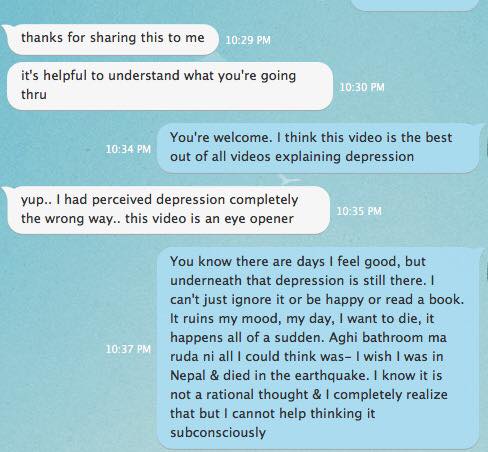
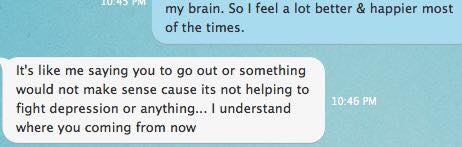
I started this blog to talk about my mental health issues, but that hasn’t really been happening (Hi, procrastination!) So I’m going to share screenshots of a conversation I recently had with a close friend, who good-naturedly thought I could get over my depression by just “relaxing”.
I used this extremely informative Ted-Ed video for help, which explains differences between “feeling depressed and sad” and “clinical depression”.
Here’s how our conversation went (some words & sentences are in Nepali) :





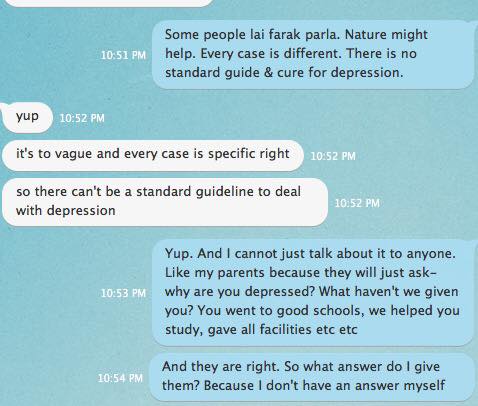


Not everyone can write stories or make movies about mental health issues, but what each of us can do is talk to one other person beside us, learn information, share information, change minds, feel accepted, accept others and extend the conversation beyond #BellLetsTalk day into the rest of our lives.
 TheHyperteen